Prof. Hui Zhai has published over 160 papers, including more than 50 in high-impact journals. His work has received over 13,500 citations on Google Scholar, with 31 papers cited more than 100 times, 14 cited more than 200 times, and a highest single-paper citation count exceeding 1,100.
A complete publication list is available on https://scholar.google.com/citations?user=Lhc7LL8AAAAJ&hl=en&oi=ao&pli=1
According to Google Scholar, 14 of his publications have each been cited over 200 times.
| Title | Publish | Citation | |
|---|---|---|---|
| Machine Learning Topological Invariants with Neural Networks | Phys. Rev. Lett. 2018 | 333 | |
| Measuring Out-of-Time-Order Correlators on a Nuclear Magnetic Resonance Quantum Simulator | Phys. Rev. X 2017 | 536 | |
| Out-of-Time-Order Correlation for Many-Body Localization | Science Bulletin 2017 | 381 | |
| Degenerate Quantum Gases with Spin-Orbit Coupling: a Review | Rep. Prog. Phys. 2015 | 686 | |
| Experimental Determination of the Finite-Temperature Phase Diagram of a Spin-Orbit Coupled Bose Gas | Nat. Phys. 2014 | 230 | |
| Collective Dipole Oscillations of a Spin-Orbit Coupled Bose-Einstein Condensate | Phys. Rev. Lett. 2012 | 996 | |
| Spin-Orbit Coupled Degenerate Fermi Gases | Phys. Rev. Lett. 2012 | 1155 | |
| Spin-Orbit Coupled Quantum Gases | Int. J. of Mod. Phys. 2012 | 304 | |
| Spin-Orbit Coupled Fermi Gases across a Feshbach Resonance | Phys. Rev. Lett. 2011 | 244 | |
| Spin-Orbit Coupled Spinor Bose-Einstein Condensates | Phys. Rev. Lett. 2010 | 782 | |
| Antiferromagnetically Driven Electronic Correlations in Iron Pnictides and Cupreates | Phys. Rev. B 2009 | 211 | |
| Functional Renormalization-Group Study of the Pairing Symmetry and Pairing Mechanism of theFeAs-Based High Temperature Superconductor | Phys. Rev. Lett. 2009 | 638 | |
| Nodal Spin Density Wave and Band Topology of the FeAs-Based Materials | Phys. Rev. B 2009 | 309 |
Publications in High-Impact Journals
| Journal | Number of Papers | Impact Factor (2024) | |||
|---|---|---|---|---|---|
| Science | 1 | 44.7 | |||
| Nature Physics | 5 | 17.6 | |||
| Physical Review X | 2 | 11.6 | |||
| Physical Review Letters | 39 | 8.1 | |||
| PRX Quantum | 1 | 9.3 | |||
| Nature Reviews Physics | 2 | 44.8 | |||
| Reports on Progress in Physics | 2 | 19 | |||
| Science Bulletin | 4 | 18.8 | |||
| National Science Review | 1 | 16.3 |
Representative Work:
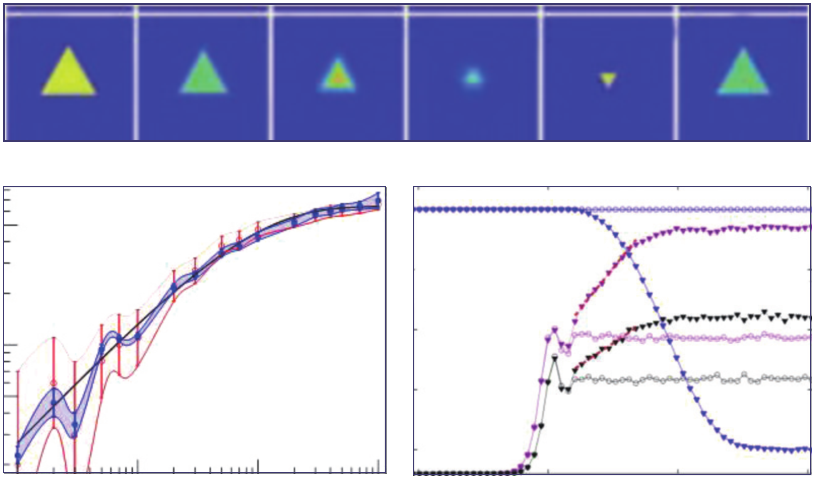
★Nonequilibrium Dynamics of Quantum Matter
o Proposed a scheme to verify the scramblon theory, which describes quantum information scrambling, and used this theory to develop an improved protocol for mitigating errors in dynamical time-reversal experiments. This proposal was experimentally confirmed in collaboration with a group at the University of Science and Technology of China. [Phys. Rev. Lett. 2026]
o Proposed a method to overcome finite-size effects and off-critical-point effects in studies of the Kibble–Zurek mechanism. The proposal was experimentally verified in collaboration with an experimental group at Tsinghua University. [Phys. Rev. Lett. 2025]
o Proposed schemes for tuning the topological angle in lattice-gauge-theory quantum simulators and for dynamically probing confinement–deconfinement phenomena. These proposals were experimentally realized by a group at the University of Science and Technology of China. [PRX Quantum 2022]
o Revealed the connection between quantum many-body scar states and quantum criticality. In collaboration with an experimental group at the University of Science and Technology of China, this phenomenon was observed experimentally. [Phys. Rev. B 2022; Phys. Rev. Lett. 2023]
o Proposed an ideal-gas Boltzmann-equation approach that generates a class of exact solutions to hydrodynamic equations, explaining experimental observations in two-dimensional Bose condensates by a Paris experimental group. This exact solution is now referred to by colleagues as the Shi–Gao–Zhai solution. [Phys. Rev. X 2021]
o Established the theory of non-Hermitian linear response, which uses dissipative processes to probe equilibrium correlations. This theory explained cold-atom dissipation experiments in optical lattices by a Paris experimental group and was later further confirmed by experiments at Tsinghua University. [Nat. Phys. 2020]
o Proposed a method to measure equilibrium correlations by varying system parameters at different ramping rates in time, which was experimentally realized by a group at Tsinghua University. [Sci. Bull. 2020]
o Proved the relation between the growth of entanglement entropy and out-of-time-order correlators in nonequilibrium dynamics. In collaboration with an experimental group at the University of Science and Technology of China, this work led to one of the earliest experimental measurements of out-of-time-order correlators worldwide and enabled the experimental measurement of entanglement-entropy dynamics using this relation. [Science Bulletin 2017; Phys. Rev. X 2017]
★Spin-Orbit Coupling and Topological Effects in Cold-Atom Systems
o Proposed a scheme to measure the topological number of a Chern insulator from quench dynamics. This proposal was experimentally verified by groups at the University of Hamburg and the University of Science and Technology of China. [Phys. Rev. Lett. 2017]
o Proposed a scheme for realizing Floquet topological states in shaking optical lattices, providing a route to the Haldane model in cold-atom systems. This proposal was later adopted by an experimental group at ETH Zurich, leading to the successful realization of the model in cold atoms. [Phys. Rev. A 2014]
o Proposed using highly magnetic lanthanide atoms to generate synthetic gauge fields and simulate spin-orbit-coupling effects. This idea was later confirmed experimentally by a group at Stanford University. [Phys. Rev. A 2013]
o In collaboration with Shanxi University, realized the first spin-orbit-coupled degenerate Fermi gas. This work also developed a framework for studying spin-orbit-coupled Fermi gases, which was subsequently used in experiments by groups in Florence, Stanford, the Hong Kong University of Science and Technology, and other institutions. [Phys. Rev. Lett. 2012]
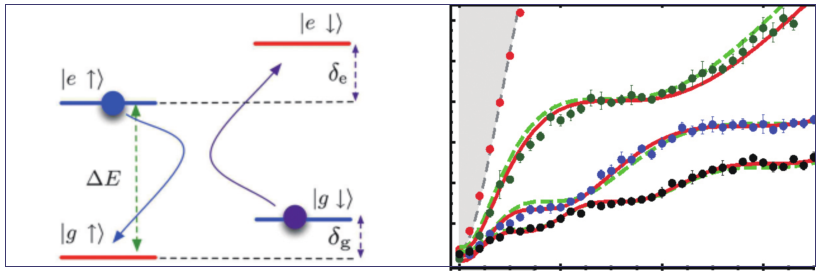
o Revealed the effects of spin-orbit coupling on Fermi gases across a Feshbach resonance and on the production of Feshbach molecules induced by spin-orbit coupling. [Phys. Rev. Lett. 2011; Nat. Phys. 2014]
o Predicted spin-orbit-coupled spinor Bose-Einstein condensates and the stripe superfluid phase, which was later experimentally confirmed by the group of Nobel laureate Prof. Wolfgang Ketterle at MIT. Also predicted collective dipole oscillations and finite-temperature effects in spin-orbit-coupled Bose gases; in collaboration with a group at the University of Science and Technology of China, these effects were experimentally verified. [Phys. Rev. Lett. 2010; Phys. Rev. Lett. 2012; Nat. Phys. 2014]

★Resonant Scattering and Correlation Effects in Cold-Atom Systems
o Proposed a method to control spin-exchange interactions in alkaline-earth-metal atomic gases using confinement-induced resonances. This proposal was later confirmed experimentally by a group in Munich. [Phys. Rev. A 2015]
o Discovered a new type of Feshbach resonance in alkaline-earth-metal atoms, named the orbital Feshbach resonance. This theoretical prediction was subsequently confirmed by two leading cold-atom experimental groups in Munich and Florence. [Phys. Rev. Lett. 2015]
o Predicted a class of dynamical expansion phenomena with discrete scaling symmetry. Since the same symmetry had previously appeared in the Efimov effect in quantum few-body systems, this phenomenon was named Efimovian expansion. In collaboration with an experimental group at East China Normal University, this effect was observed experimentally. [Science 2016]
o Carried out an early theoretical study of superradiance of degenerate Fermi gases in a cavity, revealing how Fermi degeneracy and the geometry of the Fermi surface give rise to correlation effects that strongly influence superradiance. [Phys. Rev. Lett. 2014]
o Proposed a class of quasiparticle excitations known as repulsive polarons. Their properties were later studied by experimental groups including Cambridge, and were quantitatively measured by the Florence group, showing excellent agreement with the theoretical predictions. [Phys. Rev. A 2010]
★Machine Learning and Physics
o Established a theoretical framework based on information scrambling to analyze the learning dynamics of quantum neural networks. [Phys. Rev. Lett. 2020]
o Proposed a two-layer introspective structure to interpret neural networks and open the “black box” of neural-network learning, using the learning of the Schrödinger equation as a concrete example. [Sci. Bull. 2019]
o Demonstrated the machine learning of global topological invariants with neural networks, and showed that the neural-network output can reproduce the mathematical expression used to compute topological invariants. [Phys. Rev. Lett. 2018]
★Electronic Pairing Mechanism in Iron-Based Superconductors
o Predicted the pairing symmetry of FeAs-based high-temperature superconductors, which was later supported by many experimental observations. Using the functional renormalization-group method, this work analyzed the pairing symmetry and pairing mechanism of FeAs-based superconductors and compared them with those of cuprates. [Phys. Rev. Lett. 2009; Phys. Rev. B 2009]